


A Strategic Guide to Navigating Implementation Obstacles
Table of Contents
AI automation challenges represent the single biggest barrier between your organisation and the operational efficiency gains you’ve been promised. I’ve watched countless business leaders approach automation with enthusiasm only to hit walls they never anticipated—from data quality nightmares to workforce resistance that derails entire projects. The reality is that most AI automation initiatives fail not because the technology doesn’t work, but because organisations underestimate the complexity of implementation.
This guide addresses the critical obstacles you’ll face when planning and executing your first AI automation project. I’m writing this for business leaders and technology decision-makers who are moving beyond the experimental phase and need practical strategies that actually work. Whether you’re leading a financial services firm exploring intelligent process automation or a healthcare provider looking to automate routine tasks, the challenges I’ll cover apply universally—and understanding them before you start makes all the difference.
Here’s the direct answer you need: The primary AI automation challenges include data quality issues, integration complexity, workforce resistance, and strategic misalignment. Approximately 95% of initiatives fail due to poor implementation practices rather than technology limitations. Success requires systematic preparation across technical, organisational, and strategic dimensions before deploying your first automated processes.
By the end of this guide, you’ll understand:
- The four interconnected categories of automation challenges and how they compound each other
- Critical technical barriers including data access problems and legacy system integration
- Strategic frameworks for building your first AI automation strategy
- Common pitfalls that derail automation projects and specific solutions to avoid them
- A practical roadmap for gradually achieving operational efficiency through phased implementation

Understanding Core AI Automation Challenge Categories
The automation challenges facing organisations fall into four distinct but deeply interconnected categories: technical barriers, organisational resistance, data management issues, and strategic planning failures. I’ve found that treating these as separate problems is itself a recipe for failure—they compound each other in ways that can quickly derail even well-funded automation efforts.
When your data quality is poor, your AI models underperform, which erodes organisational confidence, which reduces leadership support, which limits resources for proper data preparation. This vicious cycle explains why so many intelligent automation initiatives stall after initial pilots. Understanding these connections upfront is essential for building automation capabilities that actually deliver sustained business growth.
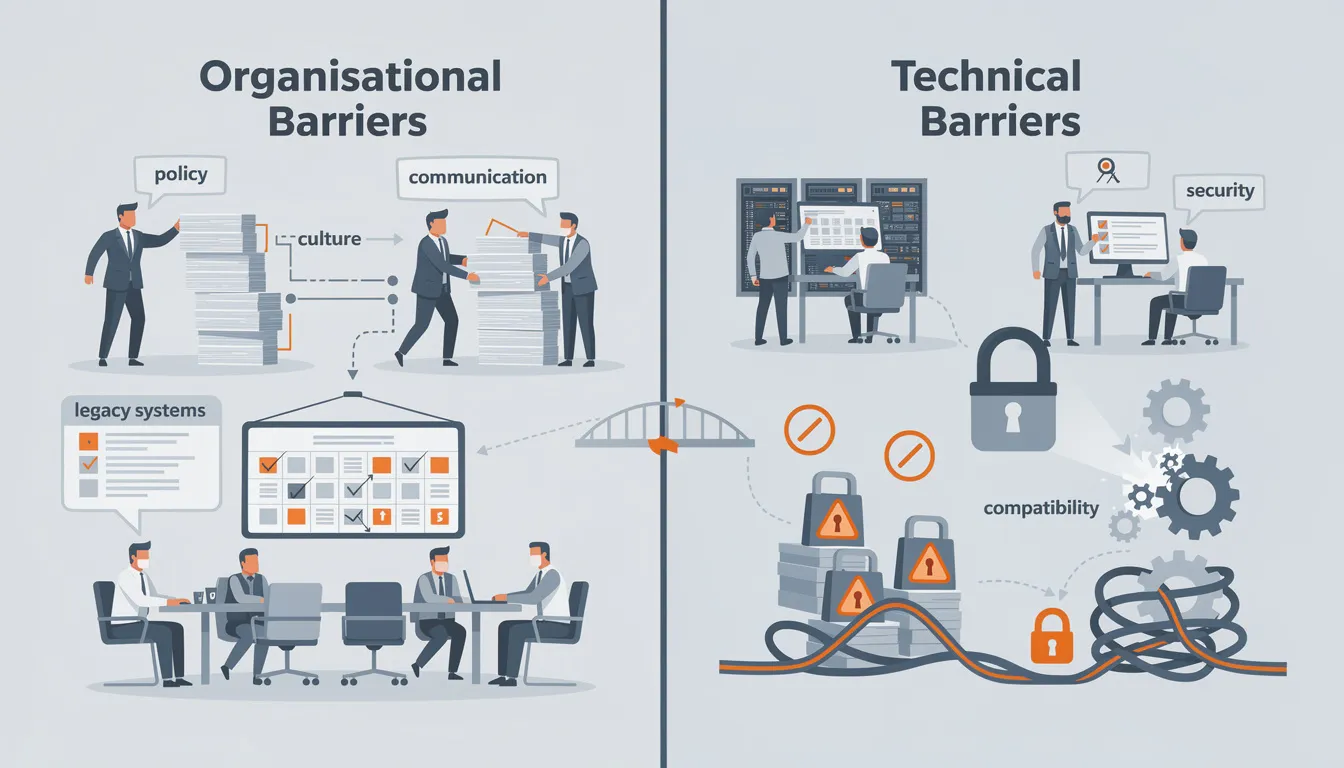
Technical vs. Organisational Barriers
Technical challenges encompass integration complexity with existing systems, data quality problems, system compatibility constraints, and the reliability requirements of AI systems operating in production environments. These are the obstacles most technology projects anticipate—but they’re rarely the root cause of failure.
Organisational challenges—change management, technical skills gaps, and leadership alignment—are far more predictive of success or failure. I’ve seen organisations with perfect technical implementations fail because employees feared for their job security and quietly undermined adoption. Conversely, I’ve watched teams overcome significant technical barriers because leadership created genuine buy-in and clear communication about how automation would enhance rather than replace human capability. The explicit connection here: your technical implementation will only succeed to the extent that your organisational readiness supports it.
Strategic vs. Tactical Implementation Issues
Strategic challenges involve unclear ROI expectations, misaligned business objectives, and the fundamental question of whether you’re automating the right business processes. Many organisations rush to implement AI automation without first establishing what success actually looks like—and then wonder why their automation projects feel directionless.
Tactical execution problems flow directly from strategic confusion: poor project planning emerges when objectives are vague, inadequate resource allocation happens when ROI expectations are unrealistic, and scope creep destroys timelines when priorities aren’t firmly established. Before diving into specific technical implementation challenges, you need clarity on these strategic foundations—otherwise you’ll be solving the wrong problems efficiently.
Critical Technical Implementation Challenges
Building on this foundational understanding, let me walk you through the specific technical obstacles that trip up most first-time automation projects. These aren’t theoretical concerns—they’re the concrete barriers I’ve encountered repeatedly when helping organisations approach automation systematically.
Data Access and Quality Problems
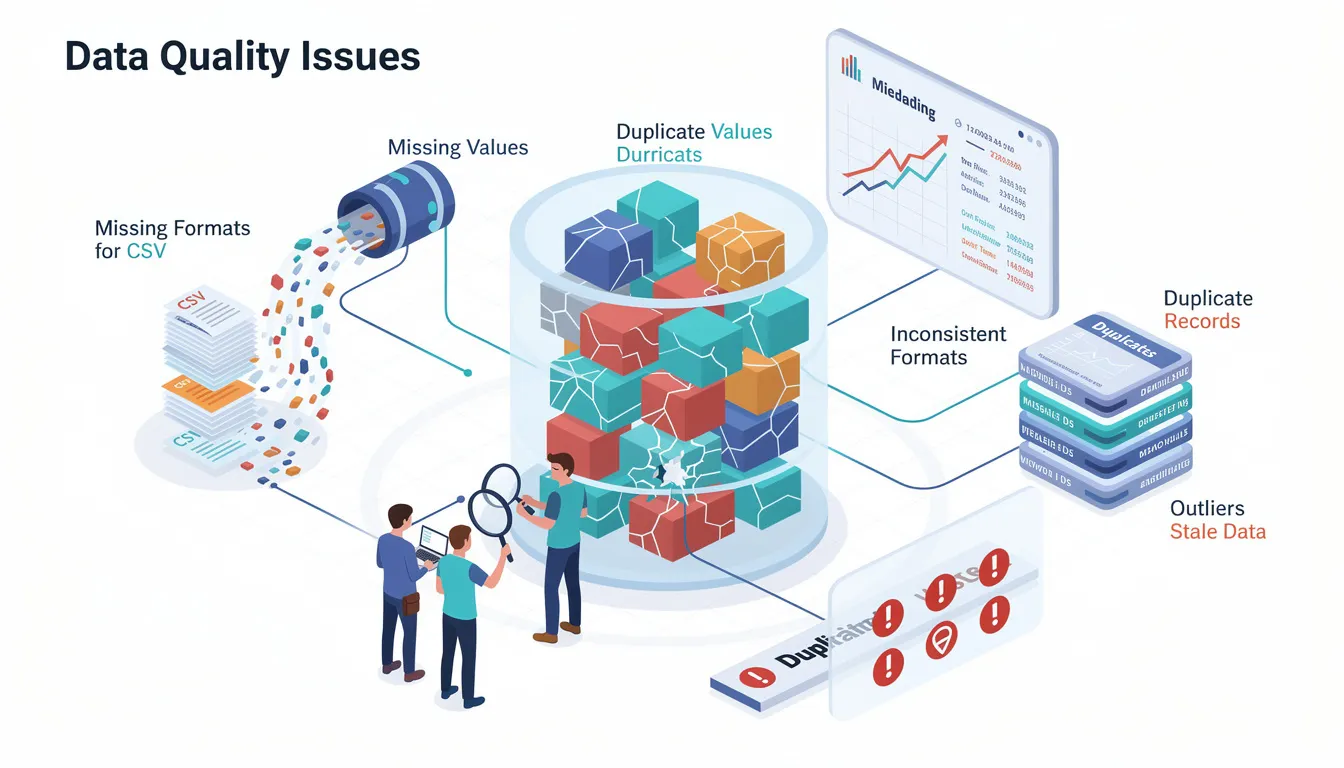
Data quality issues represent the most common technical barrier to successful AI automation. Your machine learning models are only as good as the training data they learn from, and most organisations discover—often painfully late—that their data is siloed, inconsistent, or simply inaccessible.
I’ve encountered situations where automation tools couldn’t access critical performance data due to platform restrictions similar to Roblox’s API limitations, where certain data simply isn’t exposed for external processing. Data silos between departments mean your AI systems can’t build complete pictures of business operations. Inconsistent data formats across systems require extensive data preparation work before any automation becomes possible. This is just the beginning of why 30% of failed AI projects could be rescued simply through better process intelligence and data management.
Legacy System Integration Complexity
Integrating robotic process automation and intelligent systems with existing infrastructure creates cascading technical challenges. Legacy systems often lack modern APIs, forcing workarounds that introduce fragility and security vulnerabilities. Your automated systems may need to interact with platforms that were never designed for machine-to-machine communication.
Security constraints compound these issues—particularly for organisations handling sensitive data in healthcare or financial services. Data protection regulations may restrict how automated processes can access customer information, and rightfully so. I’ve seen automation projects stall for months while security and compliance teams worked through the implications of connecting AI agents to production databases containing protected information.
AI Model Performance and Accuracy Issues
Here’s a reality check that surprises many business leaders: automation that works 70% of the time in demonstrations is completely inadequate for production deployment. Manufacturing environments require 99%+ reliability, and similar standards apply to any mission-critical automation use case. The gap between proof-of-concept performance and production requirements represents a major hidden cost.
Model drift—where AI models degrade in accuracy over time as real-world conditions change from training data—requires continuous monitoring and periodic retraining. Computer vision systems that accurately processed invoice processing in testing may struggle with slightly different document formats in production. Natural language processing models trained on historical customer inquiries may misinterpret new terminology.
Key technical mitigation strategies include: establishing robust testing protocols before production deployment, building continuous monitoring systems to detect performance degradation, creating feedback loops for ongoing model improvement, and setting realistic expectations about the iterative refinement required for reliable intelligent automation.
Understanding these technical barriers is necessary but insufficient—the strategic and organisational challenges often determine whether technical solutions ever get properly implemented.
Strategic and Organisational Implementation Challenges
Technical challenges exist within organisational contexts that either enable or undermine your automation efforts. I’ve learned that addressing human and business factors often yields better results than solving purely technical problems, because organisational dysfunction can undo even perfect technical implementations.
Building Your First AI Automation Strategy
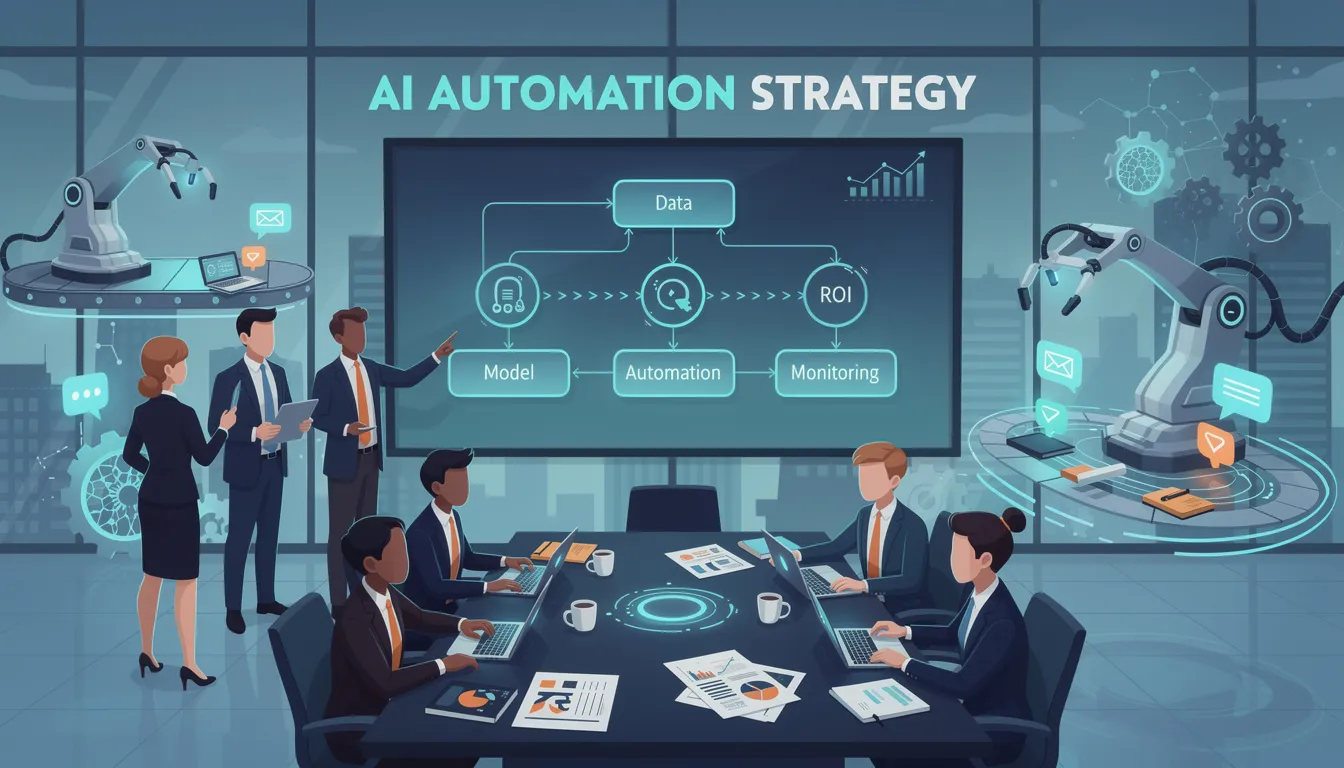
When executives need a structured approach to implement AI automation, the following planning sequence has proven most effective:
- Leadership alignment on AI vision: Before selecting automation tools or identifying processes, ensure your leadership team shares a common understanding of what AI automation will and won’t accomplish, and how it connects to broader business growth objectives.
- Process identification and prioritisation: Audit your own processes to identify high-volume repetitive tasks with clear rules and measurable outputs. Start with processes where human judgment requirements are minimal and error reduction provides significant value.
- Resource allocation and timeline planning: Budget for data preparation, integration work, change management, and ongoing maintenance—not just software licensing. Most organisations underestimate total implementation costs by 40-60%.
- Success metrics definition: Establish specific, measurable targets for operational efficiency, cost savings, and customer experience improvements before deployment, so you can objectively assess results.
Change Management and Workforce Resistance
Workforce resistance often makes all the difference between successful implementations and abandoned projects. The comparison below helps identify your organisational risk level:
| Challenge Factor | High-Risk Indicator | Mitigation Approach |
|---|---|---|
| Employee buy-in | Fear of job displacement dominates conversations | Clear communication about automation enhancing human capability rather than replacing it |
| Skills readiness | No existing technical skills for working alongside AI systems | Structured training programmes before deployment |
| Communication strategy | Leadership hasn’t articulated automation vision | Regular updates connecting automation efforts to business continuity and growth |
| Training investment | Budget allocated only for software, not people | Dedicated change management resources and ongoing learning programmes |
Organisations with multiple high-risk indicators need to invest heavily in change management before deploying any automated processes. Workforce resistance doesn’t just slow adoption—it can actively undermine system effectiveness when employees distrust or circumvent automation systems.
This organisational groundwork directly connects to avoiding the common pitfalls that derail most AI automation projects.
Common Pitfalls and Strategic Solutions
Understanding why 95% of AI automation projects fail is essential for not becoming another statistic. The failures I’ve witnessed typically stem from three predictable patterns—all of which are avoidable with proper planning.
Insufficient Data Preparation and Access Planning
Many organisations discover data problems only after automation projects are underway, when fixing them is expensive and delays are costly. The solution involves front-loading this work: conduct comprehensive data audits before vendor selection, establish data access protocols that satisfy security requirements, and create data quality baselines so you can measure improvement.
For organisations with significant unstructured data or complex data management requirements, budget 30-40% of your initial project timeline for data preparation alone. This investment minimises disruption during deployment and prevents the expensive discovery that your AI models can’t actually access the information they need.
Unrealistic ROI Expectations and Timeline Pressure
Executives often expect immediate cost savings from automation, creating pressure that leads to shortcuts in implementation. I’ve watched organisations skip pilot phases, underinvest in robust testing, and declare success prematurely—only to face system failures that erode organisational confidence in AI capabilities.
The solution is a phased implementation approach: start with low-risk pilot processes where failure won’t impact business continuity, establish realistic efficiency milestones that acknowledge the learning curve, and build the business case gradually through demonstrated results rather than projected savings. Customer satisfaction improvements and error reduction often materialise before major cost savings—track these interim wins to maintain organisational support.
Lack of Cross-Functional Team Coordination
AI automation crosses departmental boundaries, yet most organisations assign ownership to IT or operations without engaging other stakeholders. Supply chain, sales operations, customer experience, and compliance teams all have legitimate interests in how automated systems operate—and their buy-in is essential.
The solution requires establishing governance structures that include cross-functional representation, scheduling regular stakeholder communication to surface concerns early, and creating shared accountability frameworks so no single department bears all the risk or receives all the credit. Managing risk across the organisation means ensuring human oversight mechanisms satisfy everyone’s requirements before full deployment.
These pitfalls share a common theme: they result from treating AI automation as a technology project rather than a business transformation initiative.
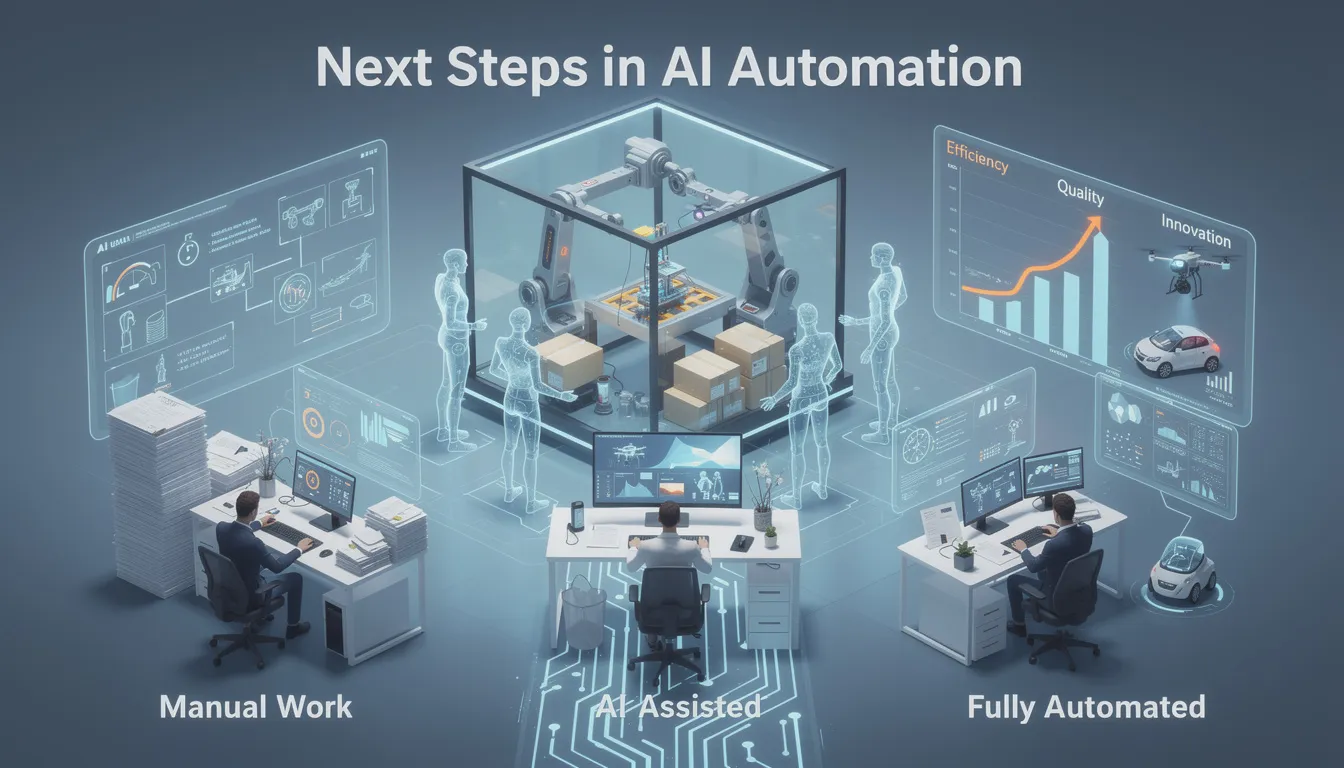
Next Steps
The AI automation challenges I’ve outlined—technical barriers, organisational resistance, data management issues, and strategic misalignment—are formidable but not insurmountable. The organisations achieving competitive advantage through intelligent automation aren’t the ones with the biggest budgets or the most sophisticated AI tools; they’re the ones taking a systematic approach that addresses all four challenge categories before and during implementation.
Here are your immediate next steps:
- Conduct an organisational readiness assessment evaluating your current data quality, leadership alignment, workforce sentiment, and process documentation
- Identify high-impact, low-risk pilot processes where automation can demonstrate value without threatening business continuity—invoice processing, routine customer inquiries, or other high-volume repetitive tasks
- Establish a data quality baseline so you can measure improvement and identify gaps before they derail your automation projects
- Build a cross-functional implementation team with representation from operations, IT, compliance, and affected business units
Successfully deploying your first AI automation is just the beginning. Related topics you’ll need to address include ongoing performance monitoring to prevent model drift, scaling successful automations across additional business processes, and eventually integrating more sophisticated AI capabilities like AI agents and advanced machine learning models as your organisational maturity increases.
Additional Resources To Consider
AI Automation Readiness Assessment Checklist
- Data governance maturity evaluation
- Process documentation completeness review
- Stakeholder alignment verification
- Technical skills gap analysis
- Change management capability assessment
Data Quality Audit Template
- Data source inventory and access verification
- Consistency and completeness metrics
- Sensitive data handling protocols
- Integration point documentation
Change Management Communication Framework
- Leadership vision articulation guide
- Employee concern addressing protocols
- Training programme design principles
- Feedback loop establishment procedures
These resources support the systematic approach to enabling organisations to achieve operational efficiency through AI-driven automation while avoiding the pitfalls that derail most implementations.