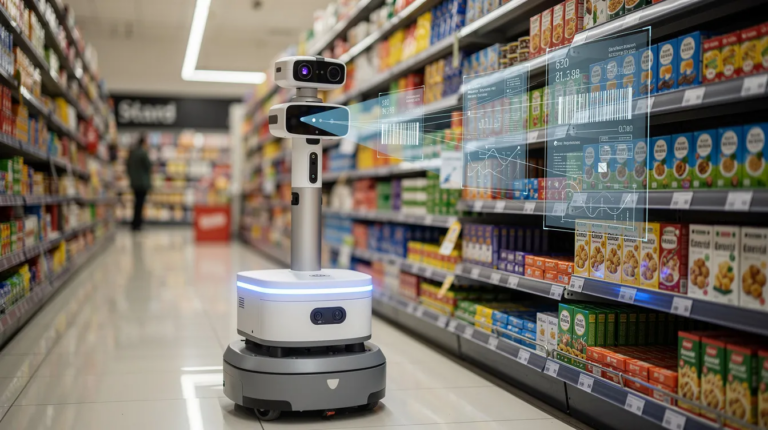


AI automation transforms how organizations handle everything from customer inquiries to complex manufacturing processes, delivering measurable efficiency gains across every major industry. These applications combine machine learning, natural language processing, and computer vision to perform tasks that previously required significant human intervention.
This guide covers proven AI automation use cases spanning customer service, financial services, healthcare, manufacturing, retail, human resources, and supply chain management. Business leaders, IT teams, and decision-makers evaluating AI powered automation opportunities will find concrete examples with documented outcomes. We focus on implementations that have moved beyond pilot stages to deliver real-world examples of operational impact.
Direct answer: AI automation use cases range from AI powered chatbots handling 80% of common customer issues to predictive maintenance systems reducing equipment failures by 70%, with organizations reporting ROI improvements of 20-260% depending on implementation scope and industry context.
By reading this guide, you will:
- Understand 50+ specific AI automation applications across major industries
- Learn which use cases deliver the highest ROI for different business operations
- Recognize implementation patterns that separate successful deployments from failed pilots
- Gain frameworks for evaluating automation opportunities in your organization
- Access benchmarks for measuring success against industry standards
Table of Contents

Understanding AI Automation Use Cases
AI automation use cases represent specific business scenarios where artificial intelligence technologies automate processes, decisions, or routine tasks that traditionally required human effort. Unlike traditional automation, which follows rigid rules and handles only structured data, AI driven automation adapts to new information, processes unstructured data, and improves performance over time through machine learning algorithms.
Organizations pursue these use cases to achieve operational efficiency, reduce costs, improve accuracy, and free employees for strategic tasks requiring judgment and creativity.
Customer-Facing AI Automation
Customer-facing AI automation encompasses AI tools that directly interact with customers or enhance the customer experience through personalization and responsiveness. This category includes AI powered chatbots that resolve inquiries instantly, recommendation engines that personalize product suggestions, and dynamic pricing systems that optimize offers in real time.
The business value emerges through improved customer satisfaction scores, higher conversion rates, and reduced burden on human customer service agents. Companies implementing customer-facing automation report handling up to 80% of common issues without escalation, while customers increasingly expect immediate, intelligent responses to their queries.
Internal Operations Automation
Internal operations automation targets business processes that employees perform repeatedly, often involving document processing, data analysis, and workflow coordination across multiple systems. Examples include automated invoice processing, employee onboarding workflows, compliance monitoring, and legal document analysis.
These implementations deliver value through cost reduction, fewer errors, and productivity gains that allow employees to focus on complex tasks requiring human judgment. Organizations typically see 20-50% reductions in processing time and significant improvements in accuracy by reducing human error in repetitive tasks.
These foundational categories enable the specific industry applications that follow, where AI technologies address sector-specific challenges with tailored solutions.

Industry-Specific AI Automation Use Cases
Building on these foundational categories, specific industries have developed mature use cases that demonstrate how AI powered systems solve sector-specific challenges. The following examples represent real-world examples with documented outcomes, organized by major industry verticals.
Financial Services and Banking
Financial institutions lead enterprise automation adoption, with banking executives prioritizing fraud detection (56% cite as top priority), security strengthening (51%), cost-efficiency (41%), and customer experience improvements (41%).
Fraud Detection and Prevention AI algorithms analyze transaction patterns across millions of data points in milliseconds, identifying anomalies that indicate fraudulent activity. Machine learning models continuously learn from new fraud patterns, adapting to evolving threats without manual rule updates. eBay’s AI system flags misleading listings, fake images, and suspicious seller activity automatically, lowering visibility and triggering verifications while monitoring buyer-side return fraud—protecting platform integrity without disrupting legitimate users.
Automated Loan Processing and Credit Scoring AI powered automation reduces loan processing time by 60% through intelligent document processing and predictive credit analysis. Machine learning algorithms assess creditworthiness using broader historical data patterns than traditional scoring methods, improving approval accuracy while reducing manual review requirements.
Intelligent Customer Service Bank of America’s Erica virtual assistant has handled over 1 billion customer interactions, resolving account inquiries, providing spending insights, and guiding customers through complex tasks. U.S. Bank’s use of Salesforce Einstein for predictive lead scoring analyzed CRM data and customer behavior to prioritize high-potential leads, closing deals 25% faster and boosting conversions by 260%.
Trading and Portfolio Optimization GenAI applications in trading and portfolio optimization represent the highest ROI use case in financial services (25% of top performers cite this), with automated systems analyzing market conditions, executing trades, and rebalancing portfolios based on predefined strategies and real-time market data.

Healthcare and Life Sciences
Healthcare organizations employ AI automation for earlier disease detection, administrative efficiency, and accelerated research timelines.
Medical Imaging Analysis Computer vision systems analyze medical images with superhuman consistency, spotting anomalies that humans might miss. AI assists radiologists in reducing report generation time by 40% while improving diagnostic accuracy. These AI models provide constant vigilance similar to quality control in manufacturing, catching subtle indicators across thousands of scans without fatigue.
Drug Discovery Acceleration Machine learning algorithms analyze molecular structures, predict drug interactions, and identify promising compounds, potentially reducing development timelines from 10+ years to 3-5 years. AI processes vast datasets of clinical trial results, research papers, and genetic information to surface insights that would take human researchers years to discover manually.
Administrative Automation Patient appointment scheduling, insurance verification, and care coordination automation eliminate administrative bottlenecks. Intelligent automation handles appointment reminders, follow-up scheduling, and care plan compliance monitoring, reducing no-show rates and improving patient outcomes.
Clinical Decision Support AI powered systems analyze patient data, medical histories, and current symptoms to provide diagnostic recommendations and treatment suggestions, supporting physicians in complex cases while reducing diagnostic errors.
Manufacturing and Supply Chain
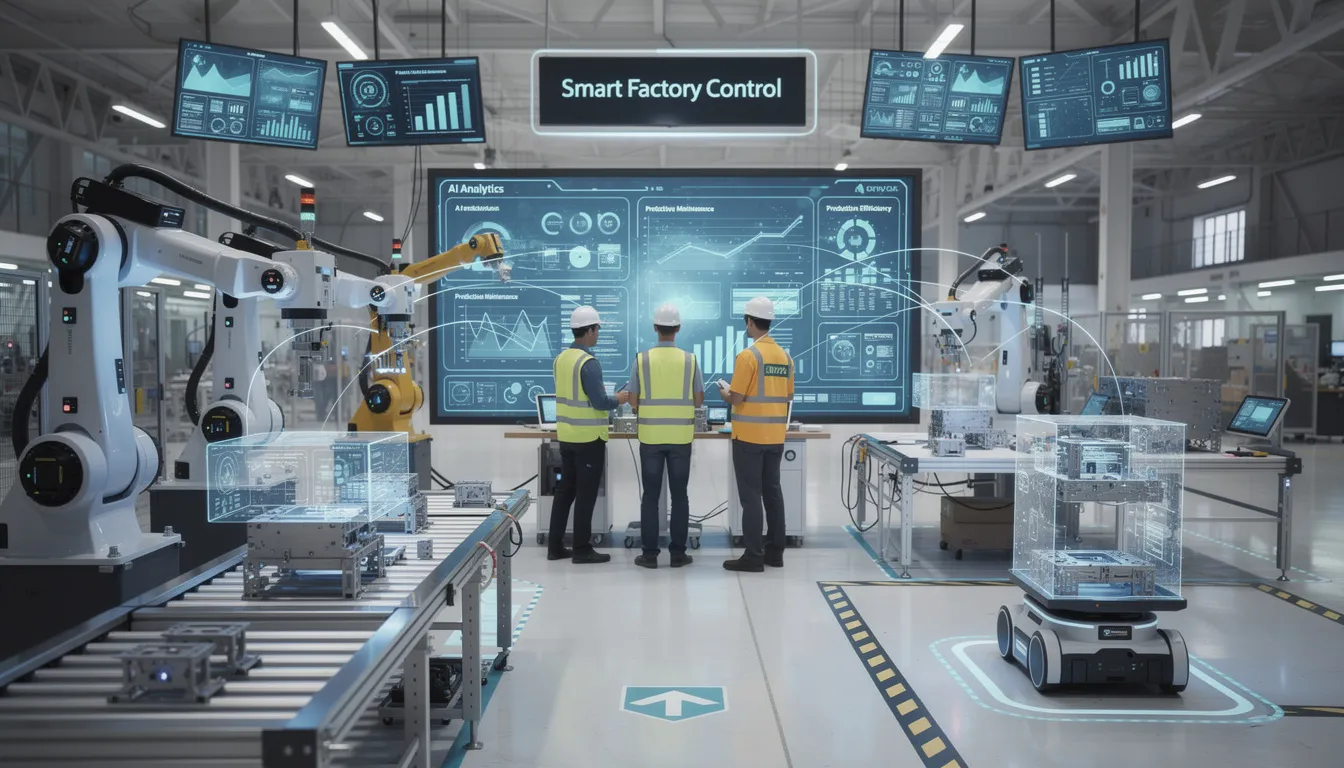
Manufacturing sees AI automation adoption in production (39%), inventory management (33%), and quality operations (24%), with Industry 4.0 leaders achieving 2-3x productivity gains.
Predictive Maintenance AI systems monitor equipment sensors continuously, predicting failures before they occur and scheduling maintenance during planned downtime. Organizations report reducing assembly failures by 70% and achieving 30% energy reductions through optimized equipment operation. Predictive maintenance eliminates unplanned downtime that costs manufacturers millions in lost production.
Quality Control Through Computer Vision Image recognition systems identify defects with 80% higher accuracy than manual inspection, examining products continuously without fatigue. AI reduces quality control efforts by 50% while catching defects that would otherwise reach customers, protecting brand reputation and reducing recall costs.
Supply Chain Optimization Amazon’s machine learning algorithms forecast demand granularly, factoring sales trends, seasonality, weather patterns, and local events to optimize stocking levels across fulfillment centers. This AI driven automation minimizes delivery delays while reducing inventory carrying costs.
Warehouse Automation inVia Robotics’ Goods-to-Person systems enable 24/7 autonomous warehouse picking, boosting productivity up to fivefold for e-commerce operations without added labor. Robotic process automation handles picking, packing, and sorting tasks that previously required large warehouse workforces.
Sustainability Monitoring 62% of supply chain firms now use AI automation for sustainability monitoring, tracking carbon emissions, waste reduction, and compliance with environmental regulations across supplier networks.

Retail and E-commerce
Retail organizations implement AI automation for personalized recommendations (47%), conversational AI (36%), store analytics (53%), and inventory management (39%).
Personalized Product Recommendations AI analyzes customer behavior, purchase history, and browsing patterns to deliver hyper-personalized recommendations that drive 15-25% revenue increases. 66% of retailers have implemented generative AI for personalization alongside branded AI assistants (52%) and customer segmentation (50%).
Voice Commerce Amazon’s Alexa enables voice-based reorders (“Alexa, reorder dish soap”) and product queries tied to user purchase history, keeping shoppers within the ecosystem and reducing purchase friction. Voice commerce represents a growing channel where AI powered systems handle end to end automation from query to fulfillment.
Dynamic Pricing Optimization Adaptive advertising, promotions, and pricing represent 28% of ecommerce investments, with AI systems adjusting prices based on real-time data including competitor pricing, inventory levels, demand signals, and customer data. Brick-and-mortar retailers invest 40% of AI budgets in similar capabilities.
Inventory and Demand Planning AI powered demand forecasting reduces stockouts and overstock situations by analyzing historical data, seasonal patterns, promotional calendars, and external factors. GenAI auto-generates shipping documents, cutting lead times by 60% and reducing coordinators’ workload by 20%.
The North Face Conversion Optimization The North Face employed Google AI and Analytics 360 to track site searches like “midi parka,” identifying search terms that indicated purchase intent. Adding these terms to product listings tripled conversions—demonstrating how data analytics directly impacts revenue through AI-surfaced insights.

Human Resources and Talent Management
HR departments automate workflows to reduce administrative burden while improving hiring quality and employee experience.
Resume Screening and Candidate Matching AI screens resumes, matches skills to requirements, and predicts candidate fit, eliminating manual review of hundreds of applications per position. Unilever saved 70,000 hours annually through automated candidate screening, while reducing time-to-hire and improving candidate quality.
Employee Onboarding Workflow Automation Automated systems handle document collection, training scheduling, access provisioning, and compliance verification, reducing time-to-productivity by 50%. New employees receive personalized onboarding paths based on role, location, and experience level.
Performance Analysis and Development Machine learning models analyze performance data, identify skill gaps, and recommend development opportunities aligned with career paths and organizational needs. Sentiment analysis of employee feedback helps HR teams identify engagement issues before they lead to turnover.
Payroll and Benefits Administration Intelligent automation handles payroll processing, benefits enrollment, and tax compliance across jurisdictions. AI flags invoice issues, auto-categorizes expenses, and tracks changing tax rules to prevent errors and ensure compliance.
Legal and Professional Services
Legal departments leverage AI automation for document processing, research, and compliance monitoring.
Contract Analysis and Review Legal document analysis extracts key terms, identifies risks, and compares contracts against standards at speeds impossible for human reviewers. AI processes unstructured data in contracts, flagging unusual clauses and ensuring consistency across agreements.
Due Diligence Automation Nextoria’s AI workflows automate M&A due diligence, financial analysis, and buyer communications, yielding 35% faster deal closures and 20% higher deal values. AI scaled global interactions while maintaining consistency and accuracy across complex transactions.
Compliance Monitoring AI systems continuously monitor regulatory changes, assess organizational compliance, and alert legal teams to potential issues before they become violations.

Automotive and Transportation
The automotive industry transforms through AI automation in maintenance, safety, and autonomous operations.
Intelligent Maintenance Alerts AI agents provide mechanical alerts (82% owner interest), repair validation (77%), real-time diagnosis (70%), and service reminders (68%). These AI systems analyze vehicle sensor data to predict component failures and recommend preventive maintenance.
Fleet Optimization 70% of logistics organizations have adopted AI automation, prioritizing fleet planning (36%) and route optimization (35%). Daily AI routing reduces driver times by 15%, while predictive insights optimize load balancing and fuel efficiency.
Autonomous Vehicle Systems Computer vision and machine learning enable varying levels of autonomous driving, from advanced driver assistance to fully autonomous operation in controlled environments.

Entertainment and Media
Generative AI transforms content creation, personalization, and audience engagement in entertainment.
Content Generation and Enhancement GenAI creates scripts, generates visual effects, and enhances production workflows. AI tools assist writers, designers, and editors while maintaining creative direction from human teams.
Personalized Content Recommendations Streaming platforms use machine learning algorithms to analyze viewing patterns and recommend content that increases engagement and reduces churn.
Audience Analytics AI processes social media sentiment, viewing patterns, and engagement metrics to inform content strategy and marketing campaigns.
Implementation Approaches and Methodologies
Moving from use case identification to practical deployment requires structured approaches that balance quick wins with enterprise-scale transformation.
Pilot Program Development Process
Pilot programs validate AI automation value before committing significant resources. This approach works best when organizational AI maturity is developing or when use cases involve high complexity or integration with multiple systems.
- Identify high-impact, low-risk use case – Select automation opportunities with clear ROI potential but limited blast radius if issues occur; prioritize processes with measurable outcomes and available historical data for comparison
- Establish success metrics and baselines – Define specific KPIs before deployment, measuring current process performance to enable accurate ROI calculation post-implementation
- Deploy with limited scope – Launch with controlled user groups and bounded scenarios; gather feedback systematically while monitoring system performance and accuracy
- Measure and optimize – Compare results against baselines, identify improvement opportunities, and refine the AI solution based on real-world performance data
- Scale successful pilots – Extend proven implementations across broader organization, applying lessons learned to accelerate subsequent deployments
Technology Platform Comparison
Selecting the right AI platform depends on organizational capabilities, timeline requirements, and budget constraints.
| Platform Type | Best For | Implementation Time | Cost Range |
|---|---|---|---|
| No-Code AI Platforms | Simple workflow automation, quick wins, teams without technical resources | 2-8 weeks | $5K-$50K |
| Enterprise AI Suites | Complex workflows, integration with enterprise systems, governance requirements | 3-12 months | $100K-$1M+ |
| Custom AI Development | Unique requirements, competitive advantage, proprietary data models | 6-24 months | $500K-$5M+ |
| Organizations with existing IT teams and enterprise automation needs typically benefit from enterprise suites that offer pre-built connectors to business systems. Those seeking competitive differentiation through proprietary machine learning models often invest in custom development despite longer timelines. |
ITpoint Systems demonstrates the enterprise AI platform approach, using AI for documentation and development workflows. The implementation achieved 25% productivity increases across support and internal teams via API-controlled AI for content generation, brainstorming, and repetitive tasks.
The choice between platforms often determines whether digital transformation succeeds or stalls—selecting inappropriate technology creates technical debt that undermines ROI projections.
Common Implementation Challenges and Solutions
Organizations deploying AI automation consistently encounter similar obstacles. Understanding these challenges before implementation enables proactive mitigation.
Data Quality and Integration Issues
AI effectiveness depends entirely on data quality—machine learning models trained on incomplete or inaccurate data produce unreliable results that erode user trust.
Solution: Implement data governance frameworks before AI deployment, conducting comprehensive data audits to identify gaps and inconsistencies. Establish automated data validation that flags quality issues at ingestion, preventing degraded model performance. Organizations successfully deploying AI automation invest in data infrastructure as a prerequisite, not an afterthought.
Employee Resistance and Change Management
Employees often view AI automation as threat rather than augmentation, creating resistance that undermines adoption and reduces potential value capture.
Solution: Create comprehensive training programs that demonstrate how AI handles routine tasks while elevating employee roles to strategic tasks requiring human judgment. Launch pilots with early adopters who can share success stories, building organizational confidence. Clearly communicate that AI tools augment human capabilities rather than replace human workers—the most successful implementations show employees achieving more with AI support.
ROI Measurement and Success Metrics
Many organizations struggle to demonstrate AI automation value because they fail to establish baselines before implementation or track relevant metrics consistently.
Solution: Define clear KPIs before deployment and measure current process performance to establish baselines. Track both quantitative metrics (cost savings, time reduction, error rates) and qualitative measures (employee satisfaction, customer experience scores). Successful implementations show improving operational efficiency across multiple dimensions, with documented evidence supporting expansion to additional use cases.
Integration Complexity
AI systems must connect with existing business processes and multiple systems, creating technical challenges that delay value realization.
Solution: Prioritize AI service providers offering pre-built connectors to your enterprise systems. Plan integration architecture early, involving IT teams in use case selection to identify potential conflicts. Consider middleware solutions that abstract complexity while enabling end to end automation across previously disconnected workflows.
Conclusion and Next Steps
AI automation use cases span every industry with documented success stories demonstrating 20-260% ROI improvements across implementations. From AI powered chatbots reducing customer service costs by 22% to predictive maintenance cutting equipment failures by 70%, organizations that strategically deploy AI technologies gain measurable competitive advantages.
The key benefits consistently include operational efficiency gains, fewer errors in repetitive tasks, scalability without proportional labor increases, and employee elevation to higher-value work. However, success requires careful attention to data quality, change management, and realistic timeline expectations.
Take these immediate next steps:
- Audit current business processes to identify high-volume repetitive tasks with clear success metrics
- Evaluate data readiness for your top three automation candidates
- Select one pilot use case that balances impact potential with implementation feasibility
- Define baseline metrics before any implementation begins
- Engage stakeholders early to build organizational support for AI driven automation
Related topics worth exploring include enterprise automation strategy development, AI platform vendor evaluation criteria, and change management frameworks specific to AI implementations. Organizations that approach AI automation systematically—starting with clear use cases and expanding based on demonstrated results—consistently outperform those pursuing technology-first strategies.
Additional Resources
- Industry Benchmarking Reports: Gartner, McKinsey, and BCG publish annual analyses of AI automation adoption rates and ROI by industry vertical
- ROI Calculation Frameworks: Templates for quantifying automation value including cost savings, time reduction, error reduction, and revenue impact
- Vendor Evaluation Checklists: Criteria for assessing AI platform providers including integration capabilities, security certifications, and implementation support
- Implementation Timeline Templates: Realistic scheduling guidelines by use case complexity, from no-code quick wins to custom enterprise deployments
- Data Readiness Assessment Tools: Frameworks for evaluating whether organizational data supports specific AI automation use cases